
One Employee Got Sick. Your Premiums Went Up 20%. Somebody Owes You an Explanation.
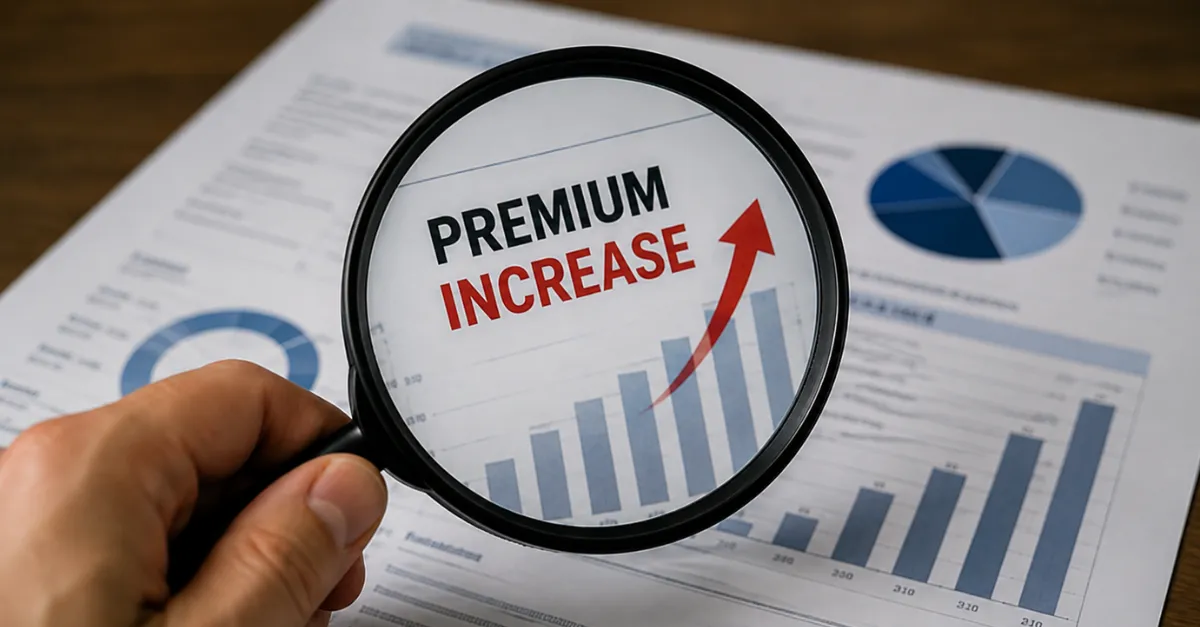
Every year, a renewal letter lands on your desk with a bigger number than last year.
You do the math. Thirty-something employees. One had a rough year health-wise. And the obvious conclusion is:
We're getting billed because one person got sick.
Sometimes that's true. Usually, it's more complicated.
So let's break down what actually drives your benefits premiums.
There Are Two Ways Your Premium Gets Set
The first: you pay based on your own claims.
If your employees used $100,000 in benefits last year, the insurer looks at that experience when setting your next year's price. This is generally called experience rating.
The second: your claims are part of a shared pool.
Your claims are combined with those of other employers. Your premium is influenced by how that larger pool performs. This is pooling.
Most employers fall somewhere in between.
Smaller groups are generally more protected from one employee's unusually large claim. As a group gets larger, its own claims experience typically has more influence on pricing.
Life insurance and disability are also commonly pooled because claims are less frequent but potentially very large. Health and dental are where your group's actual usage tends to have more impact.
So Why Did Your Premium Go Up?
Being in a pool doesn't mean your rate is guaranteed to stay the same.
It means one person's major medical crisis shouldn't land entirely on your business.
Several other things can increase your premium:
Healthcare costs went up.
Drug prices, dental fees, physiotherapy, massage therapy and other healthcare costs can increase across the board. Pooling protects you from one unusually large claim. It doesn't protect you from healthcare becoming more expensive for everyone.
Your employees got older.
If you've had employees with you for years, their age can affect premiums over time. Good employees staying with you is valuable, but it can also affect benefit costs.
Large claims affect the pool.
Plans typically have a threshold above which very large claims receive additional protection. That protection has a cost, and when expensive specialty drugs and other high-cost claims become more common, that cost can increase.
Your insurer's overall pool had a bad year.
Even if your own claims were reasonable, you're still sharing risk with other employers. If the overall pool performs poorly, premiums can increase.
And Sometimes, Yes — Your Claims Really Did Drive the Increase
Let's be blunt.
If you have 25 employees, your renewal is up 25%, and the only explanation you receive is "claims were high," that's not much of an explanation.
Ask:
- How much of the increase came from our claims?
- How much came from general healthcare cost increases?
- What is our large-claim threshold, and did anyone exceed it?
- How much of the increase is related to employee age?
- What did we pay into the plan versus claim out?
A good advisor should be able to explain these numbers in plain English.
You're paying the bill. You should understand it.
What Can You Actually Do?
Once you know why your premium increased, you have options beyond simply accepting the renewal or cutting benefits.
Make small plan changes
You can sometimes reduce costs without making employees feel like their benefits disappeared.
Examples include:
- Encouraging generic drugs where available
- Adding reasonable pharmacy dispensing fee limits
- Introducing pre-approval for certain high-cost drugs
- Reviewing drug coverage and plan design
Small changes can sometimes redirect spending without significantly affecting employees' day-to-day experience.
Review your large-claim protection
Your large-claim threshold is another lever.
A lower threshold generally provides more protection but costs more. A higher threshold can reduce the premium but leaves more risk with the employer.
It's worth reviewing rather than assuming the current setup is still right for your business.
Make sure you're using available programs
Provincial programs may help cover certain high-cost medications or healthcare expenses. Your benefits plan should work alongside those programs where applicable rather than paying for costs that could already be supported elsewhere.
The first: you pay based on your own claims.
If your employees used $100,000 in benefits last year, the insurer looks at that experience when setting your next year's price. This is generally called experience rating.
The second: your claims are part of a shared pool.
Your claims are combined with those of other employers. Your premium is influenced by how that larger pool performs. This is pooling.
Most employers fall somewhere in between.
Smaller groups are generally more protected from one employee's unusually large claim. As a group gets larger, its own claims experience typically has more influence on pricing.
Life insurance and disability are also commonly pooled because claims are less frequent but potentially very large. Health and dental are where your group's actual usage tends to have more impact.
So Why Did Your Premium Go Up?
Being in a pool doesn't mean your rate is guaranteed to stay the same.
It means one person's major medical crisis shouldn't land entirely on your business.
Several other things can increase your premium:
The Actual Point
Your benefits plan is one of the biggest expenses on your books that many business owners never learn how to read.
A renewal increase doesn't automatically mean one employee got sick and drove up your premiums.
And it doesn't automatically mean your insurer is overcharging you either.
You need to know what actually caused the increase.
Ask the questions. Look at the numbers. Understand what you're paying for before you start cutting benefits or changing insurers.
Your benefits plan deserves more than a renewal letter and a shrug.



© Copyright 2026 Next Benefits Inc. All rights reserved